• Advertise On WebUrbanist
    Become One of Our

  • Google Street View: Accidental Online Community or Real Invasion of Privacy?

    If you thought the grainy satellite images of naked sunbathers from Google Earth were a borderline invasion of privacy, Google Street View takes things to a whole new level. This remarkable feature allows users to take virtual 360-degree panaromic walk-through tours of a city - starting with San Francisco, of course. However, it has already captured people in a number of compromising situations, from scantily-clad sunbathers and unfortunate individuals going into and out of sex stores to apparent home break-ins.
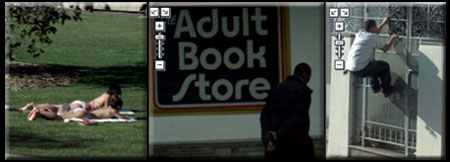
    Sexy, Embarassing and Strange Google Street View Images

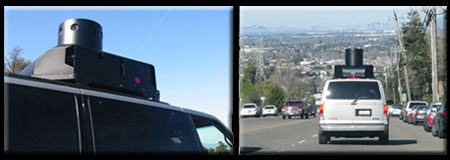
    On one level, this tool is obviously nifty. You could easy imagine wandering the virtual streets of San Francisco for hours. Still, your attitude might change pretty quickly if the scary-looking Google Street View Van caught you with your pants down (yes, literally - but the image has been taken down) or embarrassed others we knew. Already someone is asking Google to take down an image of her house cat - if Google complies, what could it mean but the end of this tool?

    Mysterious Google Street View Camera Van

    Meanwhile, you can vote on a continually-updated collection of the hottest, strangest and silliest Google Street View shots. Wired has set up a Digg/Reddit-like system for users to submit and rate the best images. If that doesn’t bring out any number of complaints from unintentional ‘Street View community members’ it’s hard to say what will! Meanwhile, here is their goofy tutorial for those of you who haven’t started exploring Google Street View yet.


    21 Comments

    • User Gravatar Matt Ellsworth
      June 8th, 2007 at 3:48 pm

      i think the thing is cool. its interesting especially if you were moving to the area… as for the man peeing on the side of the road - google has taken it down…

    • User Gravatar allsux
      June 8th, 2007 at 6:23 pm

      Yup, that one is gone but there are a lot of strange ones still up - as well as mundane ones that people are still asking to have removed. If that trend continues I suspect they’ll have to disable the whole program or come up with a way to easily/quickly remove content by location.

    • User Gravatar Paisley
      June 8th, 2007 at 6:23 pm

      I am somewhere in the middle on the webcam business in cities. It can cause a lot of heartache if the wrong picture becomes public on the net but then again, it is a great marketing tool for tourism. Either way, it can be a double-edge knife in both areas.

      Great article though. Interesting read.

      Paisley

    • User Gravatar allsux
      June 8th, 2007 at 8:22 pm

      Agreed - I can really see the benefit, too, of being able to look up an area around a street address you’re going to visit - so you’ll know what you’re looking for. But at the end of the day, there will be a lot of questionable info too. It’s a tough call for sure.

    • User Gravatar Harley
      June 9th, 2007 at 12:55 am

      I think they should blur only the offending image and not remove entire city blocks.

      You can find a Great selection of StreetView links at:

      http://www.mapmole.com

    • User Gravatar allsux
      June 9th, 2007 at 3:06 am

      LOL yah that’s a good idea - turn it into a Digg system. Meanwhile: yeah, that seems like a reasonable solution … it’ just going to be hard the bigger this gets. I wonder if that’ll mean more work than they’re willing to put into it. It wil be interesting to see either way!

    • User Gravatar Harley
      June 10th, 2007 at 9:20 pm

      I fear that with continued editing the service will become useless.

    • User Gravatar Kimberly Adkins
      June 12th, 2007 at 11:56 am

      Kevin Bankston, staff attorney with the Electronic Frontier Foundation, says: “We’re moving into a future where not only must you realize the risk that you might be photographed in public, but where it’s becoming a near certainty that you will be captured any time you go out.”
      This kind of violation of privacy sounds like a threat of kidnapping, doesn’t it? Taking an image, then holding it captive, forcing an individual to accept the circumstances because there is no other option nor means of recovery. When do the ransom demands begin do you think?

    • User Gravatar WebUrbanist
      June 13th, 2007 at 2:03 am

      I think that’s precisely right. And, in fact, in places like Canada you can’t just take a photo of someone on the street (I was stopped for taking architectural pictures that might accidentally include people). It’s definitely a fine line.

    • User Gravatar shaker1977shaker
      June 23rd, 2007 at 5:47 pm

      iwant see people in street
      pl: iwant arabic copy

    • User Gravatar james
      August 18th, 2007 at 7:40 pm

      I think you people who are crying about “invasion of privacy”, kidnapping, etc. are freekin nuts. OH NOES!! run away. What the he1l are you so afraid of? I fail to see how this could possibly hurt anyone. I’m glad the US is on the right side of this issue. Maybe people in Euroland and Canada, etc. have finally lost all their ba1ls and fully succumbed to the feminized nanny-state.

    • User Gravatar Malbar
      August 18th, 2007 at 8:39 pm

      You don’t have the right to privacy in public. Privacy applies to private settings and it’s a bit absurd that some of you think you should be able to dictate what people can or can’t take pictures of in a public setting.

      If you don’t want to be caught doing something embarassing, don’t do it in public where a camera could be watching you. It’s not like these things see through walls.

    • User Gravatar Nate
      December 15th, 2007 at 2:34 pm

      Windows Live Maps had this feature about a year before Google did, but I think these concerns are why they stopped using it.

    • User Gravatar Kristal L. Rosebrook
      March 22nd, 2008 at 12:34 am

      You don’t have the right to privacy in public. Privacy applies I agree with Malbar, “to private settings and it’s a bit absurd that some of you Ithink you should be able to dictate what people can or can’t take pictures of in a public setting.

      If you don’t want to be caught doing something embarassing, don’t do it in public where a camera could be watching you. It’s not like these things see through walls.”
      Kristal Rosebrook

    • User Gravatar todd
      March 31st, 2008 at 6:19 pm

      Google street is yet another nail in an individual’s right to privacy in
      America. The tired claim of, “no right to privacy in public,” misses the
      point. It’s not so much an issue of private vs. public as it is one of
      aggregation and distribution of the data. When records were available
      only at city hall, they were much harder to access, even though the
      data was still public. (You could take a photo of your neighbor, but
      it wasn’t aggregrated and made available to 300 million Americans.)

      Once corporate aggregators sucked up all that data and made it available to
      Joe Q. Stalker for $9.95, the ease of availability to evil doers should make
      us all question the legitimacy of making that data “public” in the first
      place.

      Before all of this, your neighbors or travelers–through physical work–
      could see your house, but now it’s available to world through little effort.
      If I were a car thief, I could write software to generate the addresses of
      everyone with a 911 Porsche in their driveway, or search for houses with
      piles of newspapers piled up if I were a burglar.

      Why should these huge corporations, like Google, own so much data
      about our lives? I’d like to see legislation that makes distribution of
      information about John Smith to permited only under John’s consent.
      People selling John’s info, or images of his house without his permission
      would be jailed.

      Remember our laws evolved without the internet, when “public” data
      was available to neighbors and through physical work, but now we really
      should define a new level, “super public” data–data that aggregators
      provide through the web about private citizens, and we should prevent
      some “public” data from being legally made “super public” by these
      corporations that want to profit on the backs of our privacy.

    • User Gravatar Jeff
      April 2nd, 2008 at 11:39 pm

      A little paranoid, aren’t we? Maybe a burglar will look for piles of newspapers. Oh, wait. That picture was taken 10 months ago and those people are home now. Maybe someone will write a program to look for Porsches in driveways. Except that pictures with Porsches are not flagged in any way so that would be impossible. By the way, good luck trying to find a Porsche parked in someone’s driveway. It would be easier to actually drive around if you were looking for one. Then it might actually be there now instead of just a year ago when the picture was taken. There is nothing that you will see in Street View that you wouldn’t see driving down the street, except that in Street View it is a record of the past only. I have yet to hear a convincing argument against it.

    • User Gravatar todd
      April 28th, 2008 at 9:58 pm

      The Founding Fathers were a little ‘paranoid,” that’s why they put
      checks on government power, wrote the BoR, etc. Let’s address all of
      your specious arguments:

      >Maybe a burglar will look for piles of newspapers. Oh, wait. That
      >picture was taken 10 months ago and those people are home now.

      Do the pictures indicate what date they were taken? Ok, then Mr.
      Burglar filters his search for pics taken in the last week. As images
      are updated, this set will change. The point is that searching on foot
      is much more difficult than doing it online (and leaves witnesses).

      >Maybe someone will write a program to look for Porsches in driveways.
      >Except that pictures with Porsches are not flagged in any way so that
      >would be impossible.

      Huh? Either I can automatically index all images in a given area or not.
      If so, I can write image recognition software to generate Porsche
      matches, just like they can do with faces. So I can generate a list of
      all houses with Porsches visible.

      >By the way, good luck trying to find a Porsche parked in someone’s
      >driveway.

      Ok, you assume people would hide them in garages. What about at
      work? Few work places have individual garaging, and many company
      lots are visible from public roads. The cars would typically be there
      for long periods (the guy who owns it works there).

      >It would be easier to actually drive around if you were looking for one.
      Huh? You told us they’re hidden in garages. Is superman riding shotgun?

      >There is nothing that you will see in Street View that you wouldn’t see >driving down the street, except that in Street View it is a record of the >past only.
      Did you not read my first paragraph? It’s not a question so much
      as to ‘what is publically visible’ as it is a question of aggegration of
      this data. If a newspaper wants to do a story on someone and publish
      pictures of their house, fine–1st amendment allows it. However,
      the Founders didn’t anticipate the Internet and the fundamental
      danger that aggegration poses to privacy and freedom.

      The Founders new that limiting a governments funds limited their
      power, and with limited funds unjust laws would be difficult to
      enforce. Now think of how quickly a government agency could search
      this database for all addresses with particular political signs–whichever
      party you like. Enforcement with little effort is the road to tyranny.

      >I have yet to hear a convincing argument against it.
      You’ve heard several cogent arguments, you just choose to ignore them.

    • User Gravatar Mark
      May 1st, 2008 at 10:45 am

      Google Street View provides another good reason to live in a gated community.

    What do you think? Leave a comment!

    « Creative Guerilla Marketing Campaigns: 15 of the Coolest, Craziest and Most Innovative Approaches
    Are Top Users Destroying the Web 2.0 Communities They Helped Create? »